longwhitekid

Biscuit Bitchfight

In A.F. Gallacher, baker, baker and confectioner, Booth's Excelsior Biscuits, Excelsior biscuits, Excelsior Steam Biscuit Factory, Gallacher & Co, Gallacher's Excelsior biscuits, Glasgow Pie House, Invercargill, Invercargill Biscuit And Jam Factory, Inverness Bread And Biscuit Manufactory, J. C. Booth, jam maker, Nicholson's Mill on May 17, 2013 at 10.46

excelsior biscuit  copy

I ran across this little series of ads, below, by chance whilst looking into Hudson’s (the famous biscuit and chocolate brand) and found them quite amusing.
In them, two rival Invercargill bakers go at each other over a perceived trademark infringement; duelling in ink on newsprint rather than with the sword. Well, they do say the pen is mightier. If it was today there would be high-powered lawyers involved, adjusting their silk designer ties (or over-size pearls, if it were Gloria Allred) before stepping up to the mike to address the press with a statement outside the court for whichever major foodstuffs corporation they happened to be representing in the battle. Because nothing is small any more. But back then in simpler times – yet more unusual circumstances perhaps – they chose to take public pot-shots at each other in the local newspaper, to settle their beef.
What amounted to a particular name stamped onto the finished product was a bone of contention for these two early Invercargill bakers. Of course in the Nineteenth Century, and well into the Twentieth – the moniker “Excelsior” was up there with Lion, Acme, Peerless and Anchor et al as the most worn out, ubiquitous product names. For example, there were over time, and possibly even at the same time, at least four or even more different brands of biscuits with this name.

NOTICE OF PUBLIC INTIMATION J C BOOTH vs A F Gallacher  - Southland Times - 8 September 1880 - Page 1 - Page 1 Advertisements Column 4

Gallacher vs. Booth:  Southland Times,8 September, 1880 .

a

The three ads all ran on the same page in the same column, of the same issue which gives rise to the question – how had A. F. Gallacher known about J. C. Booth’s ad prior to publishing, in order to respond? It did flash across my mind that it may have been a stunt, and did a journalist at the paper perhaps have a helping hand in fanning the flame? Once this clicked I became even more curious as to whether this was just some sort of elaborate publicity gig between the two of them.
Actually, at no point during my researches have I found a mention that Gallacher used the Excelsior name once for anything. I have no reason to doubt that he did otherwise Booth would not have written the letter in the first place. Or was it all a beat-up?

Booth ran the exact same standard ad as this one for his Excelsior factory a couple of hundred times through 1880 and 1881, with no variation. So what happened before and after his apparently short stint? I was curious about the two fellows involved and their history, and it looked at first like I was going to get nothing on either of them. Then like always there’s a small chink, you wedge open the door that appears – and it’s like a torrent of badly stacked papers in an over-stuffed cupboard, that have had the door forced closed on them – when you open it, everything falls out on your head and onto the floor in a mess.

So J.C. Booth was James Charles, known as Charles or Charlie. He was born in the small village of West Hythe, on the edge of Romney Marsh, England in 1852. In 1871 there is the first record of him working as a bakers assistant (officially, a servant) for Thomas Gee in Dover Pier, Dover (now simply known as The Pier, it was not at the sea but some way inland).

James Charles Booth 1852-1917EDIT

James Charles Booth, baker, 1852-1917.

a

He also spent some time residing in St Mary just east of Romney as a baker’s assistant. He obviously undertook this for a number of years in order to gain the experience needed to later strike out on his own. However between then and leaving the country, there’s record of him working as an agricultural labourer (probably because being a servant “officially”, was also officially a shitty job). Perhaps he wanted experience in cultivating and processing grains which would have been a bonus in knowledge. Likely he remained in Kent during this period. In early 1874 Booth left from The Downs, on the Kent Coast on the Wennington , and arrived to Wellington in April. He immediately found work as a baker in Invercargill. Wasting no time he married Mary Hinson Wright (1854-1925) before the year was out at the Wesleyan Church there. In 1882 Booth took part in the international exhibition of Christchurch with a display of wares. Along with Aulsebrook’s they were described as “… colonial manufacturers of this class of goods (who) seem to hold their own against outside competition”, high praise in the days when the country was only just beginning to break away from importing just about everything – and all goods from “home” were seen as superior, no matter what the quality in comparison.

GLASGOW PIE HOUSE Southland Times , Issue 4092, 11 August 1881, Page 1

Glasgow Pie House opens, Southland Times, 11 August 1881.

a

The following year he left Invercargill leaving his debtors to pay a certain John Hare. most of his children with Mary were born before moving on to the North Island; Alice Mary 1876, Eliza Jane 1877, James Charles Jr. 1879, William Stephen 1881, and Florence Louise 1883. Three more offspring followed the relocation – Ruby Ellen Jane 1885, Cecil Frank 1887, and Omega in 1889. None of the eight births appear to be registered. Before the end of 1883 he was working as a mill hand and baker at Nicholson’s Mill, Northland. Not long after he listed his occupation as “farm owner” of Kent Farm, in Booth Road, Kaipara. And here he stayed working as a dairy farmer except for a trip to Britain (London and Kent) and Australia (Brisbane) in 1894. He was done in by a stroke and buried Port Albert Public Cemetery in Northland, aged 65 years. So that’s him.

A. F. Gallacher had a much more tumultuous time (mostly his own doing I think). Andrew Francis Gallacher, baker and confectioner, was born 1844 in Greenock, Renfrewshire, Scotland. I do not know when he immigrated; but a list of unclaimed letters in the Otago Daily Times , notes one for an Andrew S. Gallacher in June 1864 (a mistake I think), and then again in April 1865 for Andrew Gallacher. Nor do I know much of his career before he comes to our attention – however I probably still have more details of his life of pie than the former party. He married Jessie Fraser in New Zealand in 1871 and had the following children with her; Samuel Joseph 1879, James Ernest 1880, Margaret Elizabeth Anne 1873, Jessie Henrietta 1874, and Catherine 1875.
In 1875 the first mention of his business is the opening of the Gallacher & Co’sInverness Bread and Biscuit Manufactory” in Dee Street opposite Yarrow, Invercargill, with a J.A. Frederic as partner, a “commodious premises” with dining rooms for coffee and pies.

bride cake races

Opportunity and talent: Gallacher catering for local events March 1881, Southland Times; and showing off his decorating skills in the Southland Times, 9 March 1882.

a

They offered the Dee Street leasehold for sale at auction, not long after a new bakehouse had just been erected. Together they went bankrupt in 1876 – Gallacher was discharged in 1877. By this year Gallacher and his wife are living at Leven Street, Invercargill when a son is born, and by 1878 the couple are living in Spey Street, Invercargill when a daughter is born – neither are registered, yet the other five children were – indicating that they both died soon after childbirth.
By around 1878 Gallacher had re-opened a business “Glasgow Pie House”  in partnership with Andrew Anderson, which was situated one away from the corner of Esk Street and the West side of Dee Street, next to Sloan’s Theatre (none of these buildings stand today). The premises again had separate bakery ovens.
In July 1879 he parted ways with Anderson officially, and the business was split with Gallacher retaining the pastry and confection business and premises while Anderson, specialising in bread, kept that part for a time. So it was a financial, rather than physical, separation. By 1882 he was running pastry, jam, confectionery and refreshment lines as well as catering for events like the One Tree Point Station Races. In the middle of June 1882 had purchased the Railway Refreshment Rooms and opened a branch of his business there.

Dee_St_west_side_looking_north_from_Esk_St Kete Christchurch Reference - LC 993.185 EAR edit

The Glasgow Pie House on the west side of Dee Street, looking north from Esk Street. Image courtesy of Kete Christchurch, Ref LC 993.185 EAR.

a

In December 1882 Gallacher offered Glasgow Pie House for sale, to concentrate on wholesale endeavours, according to his statement. The advert insists the business is going well, and quite established with a roaring trade. Although he is asking for tenders, It makes it clear he is selling the premises and the business but not the fitting out and equipment.
An ad of January 1883 is seeking quantities of fruit for the “Invercargill Biscuit, Confectionery and Jam Factory“, and specifies a premises now in Tweed Street owned by Gallacher and a Jason Gilmour. Tweed street of course was where J C Booth’s set-up the “Excelsior Steam Biscuit Factory” was located. I have to wonder if they bought it from him when he left Invercargill in 1882, it’s quite likely.

A F GALLAGHER PUBLIC NOTICES THE FIRE SAID RASH THINGS Southland Times 19 May 1882 Page 3

Loudmouth strikes again: at least he apologised, I guess. Southland Times, 19 May, 1882.

a

By the middle of February 1883 Gallacher had apparently moved on from the Glasgow Pie House, selling up to an S. Langford (a presumably later photo shows R Johnson’s name emblazoned on the building, likely after Jessie Gallacher sold the business post her husband’s death). In March 1883 he filed for bankruptcy for a second time. At a meeting of creditors his ownership of a house in Winton is mentioned – although I suspect the family may have lived above the shop for at least a couple of years during financially strained times.

ANDREW FRANCIS GALLACHER BANKRUPT Southland Times 13 October 1883 Page 3

One of a legion of notices to appear in the papers pertaining to Gallacher’s legal woes. Southland Times, 13 October, 1883.

a

At a March 8 meeting of the creditors that was reported in the papers in an article entitled “A Reckless Trader”, “…it was brought out that he had but a very imperfect idea of his business at any time. The biscuit factory, had been losing at the rate of £6 -10 per week. The creditors expressed the opinion that the debtor was totally unfit to carry on a business, and hoped that the case would act as another warning to the people to be cautious as to whom they gave credit. One creditor signified his intention of proposing when the proper time arrives that the trustees represent the matter clearly before the Court, with the view of getting a punishment inflicted upon the debtor for the loose manner in which he had carried on his business.”

Ouch, but I think we kind of get the idea of what kind of person he was as far as business practices – all over the place and somewhat irresponsible. Further to that, in June 1882 he had been back in the Resident Magistrate’s Court charging an apprentice, an A. Rogers, of desertion. In response, Rogers testified that complainant had failed to supply his contract, that as a minor his mother never signed one, and that he did not get proper shelter with the roof leaking on to his bed. Gallacher scoffed that a nail hole in the roof was causing the issue but the amount of water that came through it was “very trifling”. The judge discharged Rogers and advised him to complete his apprenticeship. Whether he did I don’t know, but any amount of rain on your bed is just not cool.

Glasgow Pie House shown corner Dee and Esk Streets__Reference - Kete Christchurch  LC 993.185 EAR EDIT

Glasgow Pie House shown next to the corner of Dee and Esk Streets. I was really surprised to find not one but two images of this obscure business. Year unknown, but note the name above the door is now R. Johnson. I’m guessing first half of the 1890s. Image courtesy of Kete Christchurch, Ref  LC 993.185 EAR.

a

In November 1885 his wife Jessie announced a move back to the Glasgow Pie House in Dee Street. She apparently had a shop elsewhere that she was running, as well as the Railway Refreshment Rooms (who knows what happened to that). I suspect it was all in her name due to her husband’s history of legal troubles. In December it was advertised as re-opened – “The real old shop , a good dinner every day for one shilling, in the old Premises”  yet, again advertised in name under A. F. Gallacher. I’m at this point confused how someone who has gone bankrupt twice and actually sold the lease once and  the business twice still owns the business and in the same premises no less. Who knows what actually happened amongst all of these goings-on. The paper often only gives you the fragments (that’s assuming one finds all of them) and  - If you’re not on the spot, it’s too hard to figure out how it played.

Gallacher & Co's Inverness Bread and Biscuit Manufactory  Southland Times  29 December 1875 Page 3

Gallacher’s earlier endeavour also ended in financial disaster. Southland Times, 29 December, 1875.

a

Gallacher continued with the business through 1886, receiving permission from the local council to erect a sign for his business on the opposite side of the street. He passed away in 1887 at 43 years old and was buried at St. Johns Cemetery, Invercargill. They were still living in Dee Street at this time. A couple of years after his demise his wife Jessie bogarted on the Pianoforte teacher’s fees for the lessons of her two of her daughters, even though in the middle of 1887 she had collected £300 on her husband’s life insurance policy from Mutual Life Australasia. In November 1889 it was settled in the plaintiff’s favour by default as she did not turn up to court for the hearing. She later moved to Christchurch, sometime before 1896, where she saw out her “twilight” years and died in 1900 at 51 years old, residing at 33 Worcester Street.

Just saying – they sound a bit dodgy really. I wouldn’t be surprised if J. C. Booth had good reason for his accusation after all.

a
a
All content of Longwhitekid copyright Darian Zam © 2013. All rights reserved.
A Trail Goes Creamy and Cold

In Alpine Ice Cream, Apex Ice Cream Company Limited, Cornelius J Van Dongen, Eldora Ice Cream, Fonterra, Frozen Foods, G.E. Patton Ltd, Gager's Electric Belt, General Foods Corporation (NZ) Ltd, George Edward Patton, Hellaby's, Ice Cream, Lone Star Cafe, McAlpine, Newjoy Ice Cream Co, Perfection Ice Cream Co, Peter Pan Frozen Foods Ltd, Peter Pan ice cream, Prestcold refrigerators, Robinson Ice Cream, Sunshine Ice Cream, Supreme Ice Cream, Thomas Gager, Tip-Top, Wall's ice cream, Wall's Ice Cream Ltd on May 7, 2013 at 10.46

Apex Ice Cream Board recreation  copy

A recreation I’ve made of a rare metal and wood sandwich board, designed to advertise Apex outside on the footpath in front of a dairy.

a

Apex is yet again a brand about which very little is known; it was Christchurch-based and lasted around forty years or so. I don’t even have a name for a founder or owner. However this almost complete lack of information  gives me a chance to delve into the lives of various names that were at some time associated with the brand and the property. a

Airds Dairy & Cake Shop Papanui shows Apex Ice cream and Ernest Adams Cakes edit

Airds Dairy and Cake Shop, showing Apex on sale as well as Ernest Adams cakes and Queen Anne chocolates, year unknown. Image courtesy of the Gordon Shields Collection via Kete Christchurch, File ref PHG25GS

a

Apex Ice Cream Old Enamel  Sign 91 x 38 cm 1 edit  copy

Painted tin Apex advertising. The logo and slogan were fairly standard although the dimensions varied.

a

Apex seems to have been established in 1933 at 25 Manchester St, Christchurch – but by whom I do not know. Records show the company was granted a building permit on 11th of  September that year. The builder was George Edward Patton (born 1885), whom by this time had already been in business locally for a decade; in 1923 he had founded G.E. Patton Ltd at 188 Barbadoes Street, Christchurch, not that far away (now renumbered to 194, it is next to  Henry’s beer wine and spirits). This building still stands although it looks somewhat different with a remodelled facade  and is quite dishevelled today.  a

25 Manchester Street, Christchurch Central, Christchurch 8011, New Zealand 1

Above and below: The first  Apex building built 1933 by Patton, at number 25 Manchester Street, on the corner of Dundas.

25 Manchester Street, Christchurch Central, Christchurch 8011, New Zealand 2

Patton were refrigeration specialists that went on to produce commercial fridge cabinets – the type for nicely displaying drinks, snacks and treats that need to be kept chilled – obviously ice cream being one product. We can surmise that Patton, through his commercial refrigeration work – had the equipment and know-how to easily set up such an operation with the machinery it needed. A photo of 1940 of the Barbadoes showroom shows their range is very well-established. They manufactured for McAlpine  (Prestcold refrigerators), amongst others and then eventually moved into purely design/wholesale products for huge businesses like Hellaby and Fonterra. They now have a number of branches all over  New Zealand as well as in Australia, Thailand and India and major international clients. a

DSC07603 Apex Ice Cream 1960s NZ edit

The original version of the sandwich board I’ve recreated at top. Image courtesy of  www.brentz.co.nz

a

By 1936 Apex were offering family blocks as well as supplying bulk deliveries to dairies and parlours as exemplified in the couple of simple ads I have found in publications. This building still stands today on the intersection – now painted lurid orange and green and houses Printstop in two thirds and a cycle store in the remainder. a

G E Pattons 188 Barbadoes Street today edit

Above: The old G. E. Pattons showrooms, 188 Barbadoes Street, Christchurch, today. Below, the Pattons staff in the 1950s, courtesy of the Pattons website. 

Patten edit

It’s  possible Patton was from the Mount Somers area west of Christchurch as there is a mention in 1916 of someone by that name enlisting. He was part of the 13th C1 draft, and spent a spell serving in WWI. He married Ethel Laura Bundy (1894-1994) in Canterbury, year unknown. This may explain why there does not appear to be any marriage record – it’s indicated that they married between 1931-1945. It does not appear they  had any offspring or if so no records are publicly available due to privacy restrictions. That’s about all I know about him to date. He died in 1973, and was described as an engineer living in Opawa.a

APEX ICE CREAM STAMPS TO COLLECT Ellesmere Guardian, 1 October 1937, Page 1 edit colour copy

An advert for an incentive to buy Apex ice cream, Ellesmere Guardian, October 1937. Presumably a larger picture was made from individual stamps that were collected (probably not an image of an actual radio, but a picture of a radio star or show) and then once fully assembled you got your money. I doubt I’ll ever see one of these turn up – and if it did – the set wouldn’t be complete anyway.

a

It may be worth noting that another major ice cream business of the time, Perfection, was further down the same street at numbers 300 and 304 over time, and in April 1940 Patton was also tasked with building at least one of those premises for them.a

Lone Star Cafe - 26 Manchester St courtesy Lone Star Cafe FB page

The second Apex building built 1940 by Van Dongen, Number 26 Manchester Street, directly opposite the 1933 premises on the intersection of Dundas. This became the first of a chain of 25 Lone Star Cafes. Image courtesy of  their Facebook page, and appears to have been taken in the early-mid 1980s.

a

Previous occupants at 25 Manchester street, in whatever building had been there before – were both tailors (I am sure there were others). Thomas Gager is advertising an “Electric Belt” with supposed curative properties, in the late 1880s. As it turns out he fancied himself a bit of an inventor and there are a few references to his registering of patents. It seems he was in situ from at least 1882  until 1893 when there is a notice of his stock being bought for sale, after he went bankrupt – and he moved down the road to number 95. In the 1910s-1920s, Geoffrey Madden, another tailor and fitter,  is calling from the same address for men with unwanted war costumes to sell for fancy dress use.

Apex Ice Cream 25 Manchester Street - Opawa Public Library Carnival booklet 1930s edit orange

Apex advertisement from an Opawa Public Library Carnival booklet, circa 1936.

a

On the 29th of May, 1940, permission was again granted to Apex Ice Cream Co. to build on the corner of Dundas and Manchester Streets, Christchurch, showing the construction was done this time by  a C. J. Van Dongen. Cornelius Jozepfus Van Dongen (b 1885) was presumably a Dutch immigrant given the provenance of his surname. He enlisted for  service  on the 5th of  August 1918, and was passed as fit on the 13th.  Details mention his profession as carpenter and residence in Tenysson Street, Sydenham,  at the time.  He was recorded as a “builder” by profession,  by the time he died in Christchurch, in 1966. The only other snippets I could dig up on his background was that he married to Ethel May Van Dongen (b 1886) who passed away in 1918. They had lived for some time in Hawkes Bay during the 1910s. They had a daughter Gladys Sybil Petronella born 1907 (later married a Francis Joseph Ashworth, 1928).  In 1923 he married a Sara Rubena Westwood Ritchie.

Apex Ice Cream tin sign from Australian site Roadside Relics edit  copy

Painted tin Apex advertising from outside of a building. Image courtesy of  Roadside Relics, Queensland. I had a question to the retailer about how this ended up in Australia – and apparently it was purchased  from the owners of  a pub named Pump in Maryborough in the 1980s-1990s, who were originally from Dunedin and had it decorated with a collection of signs they had brought with them. 

a

Presumably this new Apex building was an additional premises, directly opposite 25 Manchester street on the intersection. This building was for many years, until recently, the original Lone Star Cafe  which eventually became a successful chain of twenty five venues. It was unfortunately destroyed in the 2010 earthquake and subsequently demolished. Apex Ice Cream Co. Ltd., was granted a Goods Service License under the Transport Act, 1949, Christchurch sometime between 1953-1962, showing that besides selling locally, they were by this time distributing far and wide.a

APEX ICE CREAM - CONTACT MAGAZINE Volume 3 No  2 Jan Feb 1943 Page 64 and 65 crop copy

Apex advert, from Contact: The National Magazine of the Royal New Zealand Air Force,Volume 3 No  2 Jan Feb 1943, Page 65. 

a

 Over the last five years three or four hand-painted tin or wood Apex signs have come up for auction – all with similar layout and slogan – although varying dimensions. The only exception has been this red dairy footpath sign (that I recreated here with some modifications) which has been for sale from a Christchurch dealer for some time now. I’ve previously contacted him through both his website and Trade Me with personal sales inquiries for items and all times I have attempted my questions have remained unanswered  yet I noticed he’s very keen to provide answers when he auctions  five or ten dollar items so…winning sales technique there. Ergo I haven’t even bothered to contact again and find out anything about the provenance of this item. Given that apparently he is not interested in making any serious money – he certainly won’t be answering questions when none at all is on offer.

Lone Star Cafe - demolished

Number 26 Manchester Street, The original Lone Star Cafe, now a danger from earthquake damage, comes down.

a

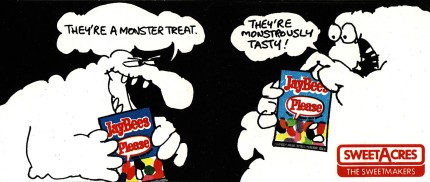
Data indicates that Apex was still running into the early 1970s at least (Christchurch Planning Tribunal/Environment Court case files are on record for 1971) – but it was eventually bought out by Tip-Top along with other companies like Supreme, New Joy, Robinson, Perfection, Eldora, Sunshine,  Peter Pan, Alpine, and Wall’s. By 1964, Tip-Top had finally achieved national distribution by gobbling up all the smaller (frozen) fish. Closed company files  indicate Apex may have changed hands in 1956, then again in 1964, which may be when Tip-Top stepped in and took over – since they were on a roll at the time buying out smaller brands in their bid to get to the top – they bought out Eldora in 1964 and Supreme in 1963. The final Closed Company Files for Apex were lodged sometime between 1964 and 1979. The only employee I’ve tracked down also commenced working for Apex in 1960 and finished up in 1964, so all the dates converge to some telling event. Unfortunately I was not able to talk to the person in question before publishing this article – but I am sure there is more to be added to this story in future. Perhaps someone trawling the web will come across this and be able to pass on some vital information that fills the gaps, like they did with the Peter Pan Frozen Foods saga.

a

THOMAS GAGER TAILOR Star , Issue 5812, 29 December 1886, Page 2 edit

Above: Gager, had been just one resident business owner  in the days before Apex. From the Star, Page 2, 29 December 1896. He moved to 95 in 1893, but he was already hawking his own patented invention of electric accessories from his former address at 25 Manchester Street in the 1880s. Below, an ad from the Press, 15 November 1893, Page 7.

THOMAS GAGER'S ELECTRIC BELTS  Press, Volume L, Issue 8640, 15 November 1893, Page 7


Credits: Thanks to Dave Homewood, from Wings Over Cambridge,  check out their collection of great Contact magazine covers online here.  Also thanks to  Chris Newey from Foodworks online - the  New Zealand Food & Beverage Directory,  for some research pointers.

a

a

All content of Longwhitekid copyright Darian Zam © 2013. All rights reserved.
a

Perfitly Preserved

In "K" Brand, Agee, Alex Harvey Industries (AHI), Australian Glass Manufacturers Co. Ltd (AGM), Bond & Bond, Choysa Tea, Don and Marjorie Symonds, Finch and Company, Gregg & Co, Gregg's, Gunn Gollin Ltd, Home Preserving, Irvine & Stevenson, L D Nathan & Co Ltd, LD Nathan Wholesale Ltd, Lion Nathan Limited, National Can Industries (NCI), Oak, Perfit, Preserves, Professor Helen Leach, Pyrex, Q-P baking powder, Quality Packers Ltd, Roma tea, S Kirkpatrick and Co Ltd, St. George, Susan Baker, Thompson & Hill, Unilever, Wiltshire NZ Ltd on April 20, 2013 at 10.46

1 Susan Baker Warhol  copy

The eternally cheerful and supremely confident preserving wiz Susan Baker, Warhol-style.

a

For a long period of history, bottling was the main method of preservation of foods – and there doesn’t seem to be much “specific” history of it in New Zealand since it is obviously not endemic; and therefore didn’t have much of a separate development geographically. It is what it is; stuff in jars, found the world over – even the earlier traditions of potting, drying and smoking of Maori culture weren’t that different from any other parts of the world.

2 Perfit Seal Large D1 Dome Perfit Seals - edit QUALITY PACKERS owned by LEVER   liquidation by 1993 these are probably 1980s

Perfit dome lid box, by Quality Packers (Q-P), probably produced in the late 1970s-late  1980s. The booklet price is listed as fifty cents at this time.

a

Although, Professor Helen Leach, a food anthropologist and historian from the University of Otago, reckons the history of it is, inexplicably, far more enduring in Aotearoa than that of the U.K. or U.S. She does have her suspicions as to why, though. I listened to an interesting broadcast on the topic where she skirted around the obvious economic issue; we’ll get to that in a moment.
MASON AND GOLDEN STATE JAM PRESERVING JARS RITCHIE'S Otago Daily Times 17 February 1920 Page 8

Ritchie’s preserving supplies, Otago Daily Times, February 1920.

a

It was a given that the accomplished housewife would have a skilled knowledge of cooking and preserving. Sometimes hundreds of pounds of produce were ‘put down’ while it was in season. Anything that could be saved for later, was – even pickled eggs, which sound kind of revolting now – were quite popular for a number of decades, as anyone who watches Boardwalk Empire would have observed.

Preserved Plums about 1899 or 1900 - Puke Ariki collection New Plymouth, Taranaki

Preserved Plums c 1899-1900, courtesy of Puke Ariki  Museum collection New Plymouth. Accession No A92.979

a

Anyway, there is likely a lot more to it than sheer financial reasons, but I know my mum did an awful lot of bottling for that very reason – we could “pick-our-own” produce locally in the semi-rural area where we lived for very little – the kids would be put to work coring, peeling and chopping in preparation – and we’d have a greater variety of food for later in the year at a low cost. I can say as far as our family, it certainly was not done for any sense of accomplishment or sheer joy as the alternatives suggested.

PRESERVING SEASON 1902  - Ashburton Guardian - 13 February 1902 - Page 3 EDIT  copy

Fletcher’s preserving supplies, Ashburton Guardian, 13 February 1902.

a

NZ History online states New Zealanders had an “obsession with bottling (and) good housewives were expected to know…”  This is a bit like saying fruit grows on trees under a blue sky, since in those days it was more a given necessity than a pastime of any sort. Also – thrift, or even the exhibition of it – through perceived activities such as home arts in the culinary manner, was seen as virtuous. Ergo, there was hardly an exception when it came to cookbooks including extensive sections on this prudent approach; as well as a plethora of them completely devoted to the topic.

4A1 100_4099 edit  smaller probably late 60s-early 70s as booklet now 30 cents up from 1968

Back of small orange G dome box with the booklet price  listed as 30 cents. This indicates it probably dates from the  late 1960s – early 70s. 

a

Domestically-based commercial canning and bottling of foodstuffs was beginning to become prevalent in the late C19th (Kirkpatrick’s “K”, Thompson and Hills‘ “OAK” , Irvine & Stevenson‘s “St George” to name some ) – however this did little to dull the ardour for home preserving – which flourished, although the technique probably may have had a significant downtime in recent decades with a notable nosedive in the 1960s (yet, Perfit claimed that in the mid 1960s Kiwi women were still squirreling away twenty million bottles per annum collectively).

4AB 100_4104 edit smaller probably late 60s-early 70s as booklet now 30 cents up from 1968

Front  of small orange G dome box above. Manufacturer is Finch & Co.

a

The drop-off was due to a number of factors. The advent of easy accessibility to home refrigeration and new-fangled methods of freezing food meant perishables, where possible, were chucked in the ice chest to use as needed. Mass advertising of goods that became more prevalent in the 1950s began to capture an audience to branded product; and the corporatisation of just about everything possible seemed to be on the rise from the early 1960s (what big business wants people doing it themselves? There’s no money in that). By the time these factors were combined with a marked rise in time poverty – especially because of women entering the workforce full time in droves – there was no real chance of recovering the decline and ever going back to those halcyon days.

4A perfit1large booklet edit

The Perfit home preserving book was published in at least four editions through the 1960s and 1970s, and was available for a nominal price by writing to the company.

a

However that has not at all stopped enjoyment of the same products over time – whether home or factory made. And it has certainly had a hobby revival in the last few years with the re-trending of vintage Kiwiana and home cooking – as people have a yearning to get back to old-fashioned ways, signifying simpler times and other unfounded romantic ideas that enter their heads. “It did have a bit of a lull for a while, but it’s never really gone away”, says Marjorie Symonds, one of the current owners of Perfit.

100_4109 edit sml probably late 60s-early 70s as booklet now 30 cents up from 1968

Back of large blue dome box. This probably early 70s as booklet price is now five cents up from around 1968.

a

Preserving memorabilia is in a little category of its own, not quite lumped in with food and drink products, but associated kitchen ephemera – “cooking stuff”. Brands of bottling gear were imported (Atlas, Mason, Fowler, Ball, Mason to name some) and a lot of companies got in on the lucrative preserve seal/ cover act like Reidrubber, KB (by IGA ), Deeko, and Jet Set (by Lane Latimer who were well known for their King brand of foodstuffs). There was Four Square and Pam’s (by Foodstuffs NZ Ltd) as well, but the two most popular were domestically produced brands Agee, and of course Perfit – which is in the oeuvre of an iconic NZ brand remembered by a number of generations.

100_4112 edit sml probably late 60s-early 70s as booklet now 30 cents up from 1968

Front of large blue dome box. Manufacturer is Finch & Co.

a

Perfit is an old French /British surname which originally stems from “Parfait” although the name of the brand seemingly has nothing to do with that and is simply an amalgamation of two words – “perfect” and “fit” referring to their function as a superior method of sealing preserved goods.

Perfit Screw Bands 12  Green copy copy

Perfit screw bands during the period they were sold in plastic rather than the classic box.

a

For decades Ms. Susan Baker, Perfit‘s ”home preserving consultant” has beamed beatifically from the cartons, with a confident glow that says “of COURSE you can do it, and all your efforts will turn out perfectly, so I’m not expecting a letter from you.” However if you ran into problems, she was at your service ; you could write to her, and she would do her best to answer. Oh – and also, for the nominal fee of a few cents, send you a home preserving handbook ( which was being produced in the 1960s and 1970s that I know of, and also L D Nathan & Co Ltd. had produced an earlier one, thought to be from the 1940s that is in the MLNZ ephemera collection). I always imagined her sitting on a spindly, high stool at her little wooden desk in the high-ceilinged Perfit warehouse somewhere in a 1950s-looking industrial division in South Auckland, with a few reference recipe tomes book-ended, and a soft lamp at her elbow, earnestly answering letters from housewives as storemen bustled around in the background preparing orders. So who was this Susan Baker, that, if you were like me – was gazing back at me every time I opened the cupboard that held the Edmonds jelly crystals, Gregg’s spices, Maggi stocks, cake decorations, and bits of preserving gear? She became an unwitting icon of our childhoods. Yet, we knew nothing about her.

Perfit Seal 12 Green Screw Bands (B2) EDIT  copy

Perfit screw band box showing contents. This looks like a recent revived version of the box.

a

As it turns out - Susan Baker was not a real person – she was invented by the marketing department of the time. “She was a fictitious character, made up when Unilever had it. They just picked out a name and put the picture of some lady on the box. There was no such person as Susan Baker”, says Marjorie Symonds, who with her husband Don acquired both the Agee (in the late 1990s) and the Perfit brand in 2000. In reality, it would have been employees like Diane Horne , who, working at L.D. Nathan‘s Fort Street building in the 1960s – who answered the inquiries during her tenure working for Ray Lowe in the Perfit Seal Division.

42 Home Preserving by Susan Baker of Perfit - Nelson Photo News - No 75 February 4, 1967

Home Preserving article by Susan Baker (apparently) for the Nelson Photo News, No 75, February 4, 1967.

a

I can’t say for sure but the brand was likely created by Nathan ( today the international behemoth based in Australia -Lion Nathan Limited ); when it was known more formally as “The Perfit Seal” – the earliest ads I can find mentioning the Perfit product are 1944-1945. Museum collections show preserving jar seals by that company from the 1950s but do not mention an actual brand name.

perfit seal auto preserver and box Kauri House Auctions 2012 cropped

An early version of the Perfit auto preserver with original box, waiting to be auctioned in Havelock North last year. This one is probably from the late 1950s-early 1960s. Image courtesy of Kauri Auction House.

a

Don Symonds has had a long history with brands prior to that – spanning thirty years or so with agents Gunn Gollin Ltd who handled the Agee product. Belinda Cimino, a former employee, recalls that GGL dealt also in “half of New Zealand’s tea”, as well as pineapple, herbs and spices, seeds, frozen seafoods, steel and cast iron kitchenware, wine and spirits. “

“I started with Gunn Gollin (GGL) in 1981 as national sales manager, and in this role I looked after the Agee brand along with several other brands – for many years. GGL was the distributor for Agee. This came about because GGL imported and supplied the compounds to make the rubber seal, to what was then named Alex Harvey Industries (AHI), manufacturers of the metal components. AHI did not have the expertise to market the product – hence we at GGL assumed that role. “

Perfit Seal Electric Home Preserver (M EDIT  copy

A late 1960s version of the Perfit auto preserver.

a

Marjorie seems to think that both Perfit and Agee stemmed from the same original business, which could be true, however the sealing components for the jars (domes, rings, seals) were both made in the same factory in Mount Wellington. I have two boxes that state “manufactured by Finch & Company Ltd.” Don Symonds says: ” I think that Finch were taken over by AHI later on. Agee and Perfit were manufactured side by side – the only difference was the colour of the compound and the outer packaging. These were both made in AHI‘s Mount Wellington factory which later became National Can Industries (NCI). Packing of the product was originally done by the Blind Institute, and later contracted out.”

100_4071 edit to blue B1 box  copy

The recent revived version of the classic blue Perfit screw band box. Most of these items are from my own personal collection.

a

Eventually like everything domestic that was hanging on, the factory could no longer compete with foreign manufacture and the new owners of the brands had to look overseas for another component fabricator . “Eventually they closed manufacture of the line down, hence why we now import them”, says Don. These days the product comes from Canada.

41  Ellesmere Guardian Volume 66 Issue 12 16 February 1945 Page 6 Advertisements Column 2 ORMANDYS

An early mention of Perfit in the  Ellesmere Guardian, February 1945. I’m not sure when Perfit was on the market but I am assuming that it was at the end of WWII.

a

The actual Agee bottles themselves were first made by Australian Glass Manufacturers Co. Ltd (AGM, established in 1915 ), their logo commonly found on many New Zealand bottles and handy for dating. The company were later famous of course for Agee Pyrex cookware – as well as insulators and baby feeders also under the Agee brand. “I believe that originally the jars were made in Australia but it could have been in the 1970s – I’m not sure of the exact date – that New Zealand changed the lid size to the US measurements – and Australia did not. hence our lids do not fit Australian jars. From then on all our jars were made domestically by a manufacturer named NZ Glass in Penrose. The jars were never sold by either Perfit or Gunn Gollin, NZ Glass sold them direct to retailers themselves. We never handled them.”

Perfit Seal - Gregg's coffee jar promo box EDIT copy

This  smaller screw bands box was a tie in product with W. Gregg & Co is probably around 1967-68 as the stamped price  shows both decimal and imperial currency – indicating it was produced when the conversion was recent enough for people to still be confused.

a

Perfit Seals New Zealand Weekly News  Jan 1966 - Perfit and Gregg's promotion box - prob circa 1968 as it shows price decimal and imperial

An advert of January 1966 explaining that special edition screw bands are now available to recycle 4 ounce Gregg’s instant coffee jars to use for preserves. The box indicates the Perfit preserving book is now in its fourth edition. This is the earliest reference I can find for it, though – at 25 cents.

a

The Perfit brand name its self wasn’t registered until 1960 by L D Nathan & Co according to IPONZ records, and interestingly, it doesn’t seem that “Susan Baker” was ever registered.

An early box of Perfit G Dome Seals made for L D Nathan sold recently on Trade Me and showed that the instruction book price had risen to fifty cents. This indicates it was produced post 1967 decimal currency introduction, and so that information tells us it was after that time Nathan on-sold the business to Unilever. A trademark registration, with no party named, shows up for the product in 1972; this seems to match up with the year of some acquisitions and changes at L D Nathan who may have decided to divest their interest in – what they likely considered at the time – a  waning brand with limited future.

5 perfit stuff 1 EDIT copy probably late 60s-early 70s as booklet now 30 cents up from 1968

A look at the design for the metal domes – early-mid 1970s.

a

It now seemingly stayed with Unilever through to 2000, although one box I have is marked “Quality Packers Ltd”  Nielsen Street, Onehunga ( a company founded in the 1930s who were well-known for their “Q-P” baking powder, and later also produced a serious Kiwi foodstuffs icon – Choysa tea, as well as Roma).Choysa (established in 1905) came from Bond & Bond, whose company became “LD Nathan Wholesale Ltd” after it was purchased by them around 1972, as Christine Cox, a former employee, remembers happening while she worked in the L D Nathan offices in Auckland central.

perfit jar holder copy edit

Box for the Perfit jar holder – it was a rubber-sheathed loop used for lifting bottles in and out of the auto preserver.

a

Eventually, the Choysa brand was moved over from LD Nathan Wholesale Ltd to Quality Packers, (which Nathan had also snapped up around the same time) to handle. Clearly Perfit was eventually slotted in under the QP division in the 1970s-1980s for reasons we don’t really know. Perhaps it seemed to be in marketplace competition with another of the numerous brands Unilever owned – or perhaps QP were just better equipped in some way to handle such a product. It could have been a myriad of reasons. So that’s how Perfit ended up being “produced” by QP. Quality Packers were liquidated in 1993 and then struck off the following year (it turns out 100% of the shares were owned by Unilever at the time) and yet they decided to retain the Perfit brand for a few more years until they finally decided they’d had enough of it.

Agee Preserving Jars and pint preserving jar box perfit seal box EDIT  copy

A variety of Agee and Perfit preserving products.

a

Don and Marjorie Symonds took over Agee first (Unilever had acquired it from Wiltshire NZ Ltd at some point – who had registered it around 1957), and “then Unilever…came to us and said would you like to have Perfit too? and we did. In 2003 we ceased production of Agee because it turns out there wasn’t really room for two brands in the market at that time, and Perfit was more popular”, says Marjorie. Don recallsPerfit was sold to us in 2000, as Unilever had decided to shed lines that were no longer classed as core business.”

6A 100_4079 edit  copy

An original version of the red screw bands box, probably early 1970s.

a

I’ve got quite a collection of the various boxes that have been issued over the years – including one that is specifically marketed for its ability to fit on a certain size of Gregg’s coffee jar that people were taking it upon themselves to recycle and use for preserving. I’d noticed that recently a lot of the older style boxes were cropping up – but in fact seemed to be a recent product. “We’ve gone back to the two older boxes, the ones that originally came out the forties or fifties. So the ones that are on the shelves now are the original box designs they used many years ago”.

6B 100_4082 edit  copy

An original version of the red screw bands box, probably early 1970s.

a

I ask if it was a deliberate decision to go back to that to give it a more traditional feel and honour that long history of preserving.“Well, yes – the product was only in plastic bags with a card label and they’re no good sitting on supermarket shelves” says Marjorie.” It doesn’t look good. So I said – let’s put them back into the original boxes. So we had them redone.” 

It’s good to see that every once in a while a company is upholding its own history and celebrating it, even if it’s in small ways.

Ellesmere Guardian Volume 66 Issue 13 20 February 1945 Page 3 Adverts column 1 FARMERS

An early mention of Perfit amongst the preserving range on offer at Farmers”. Ellesmere Guardian, February 1945.

a

a

All content of Longwhitekid copyright Darian Zam © 2013. All rights reserved.

a

Follow

Get every new post delivered to your Inbox.

Join 327 other followers